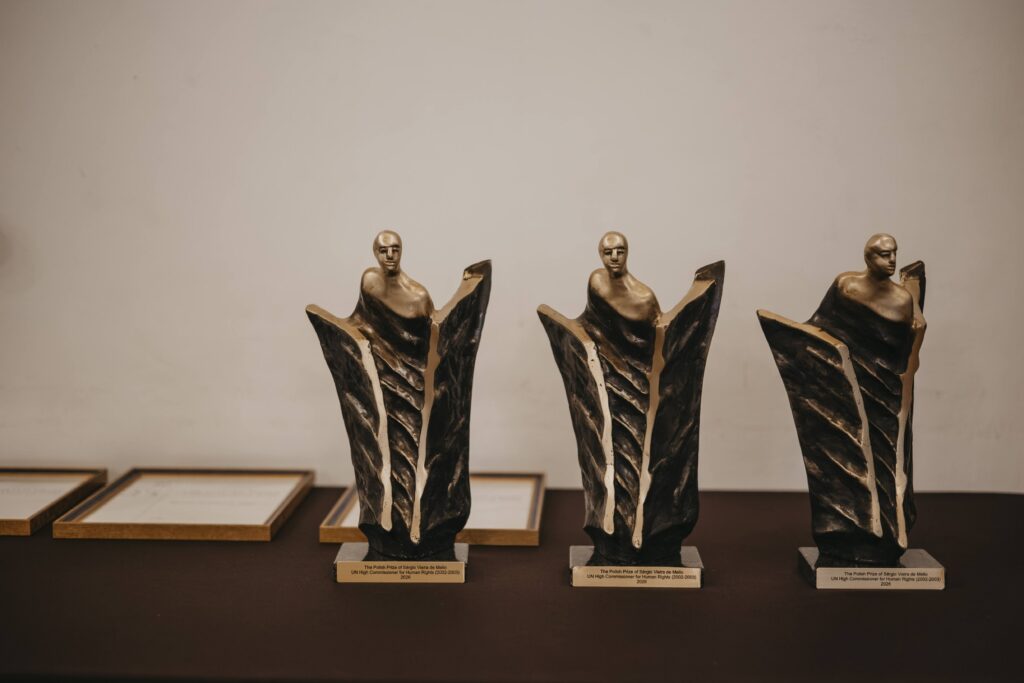
On 22 October 2026, at a ceremony held at Willa Decjusza, individuals and non-governmental organisations from around the world were honoured for their efforts to promote the peaceful coexistence and cooperation of societies, religions and cultures. For us, the Polish Prize of Sérgio Vieira de Mello is an opportunity to shine a light on those whose everyday actions bear witness to their commitment – the guardians and champions of human rights.
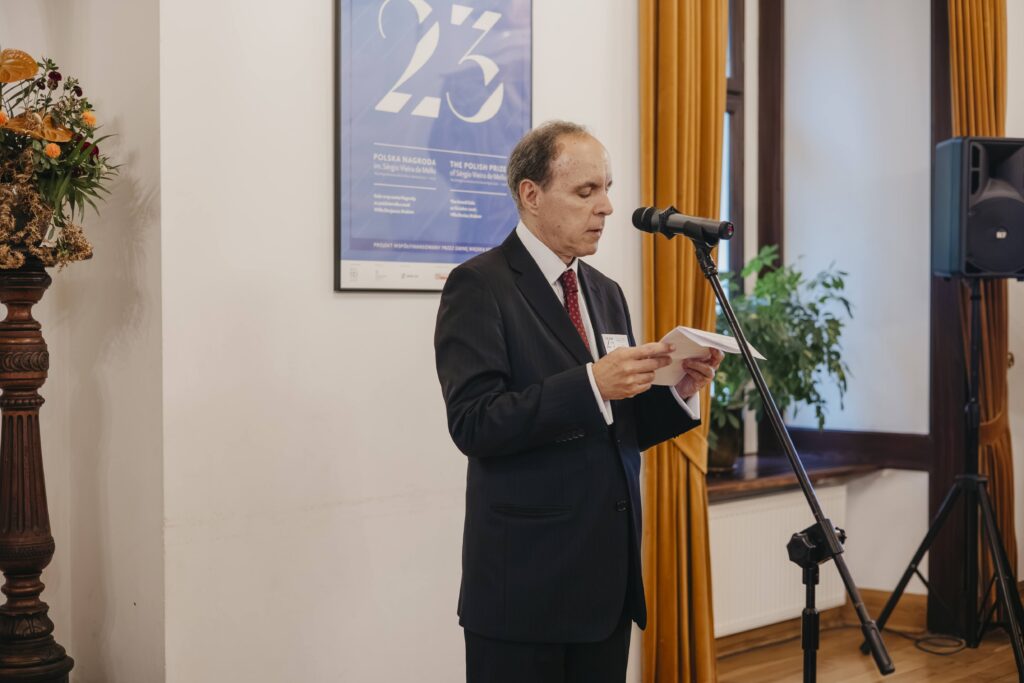
Luiz Cesar Gasser, Ambassador of Brazil in Warsaw
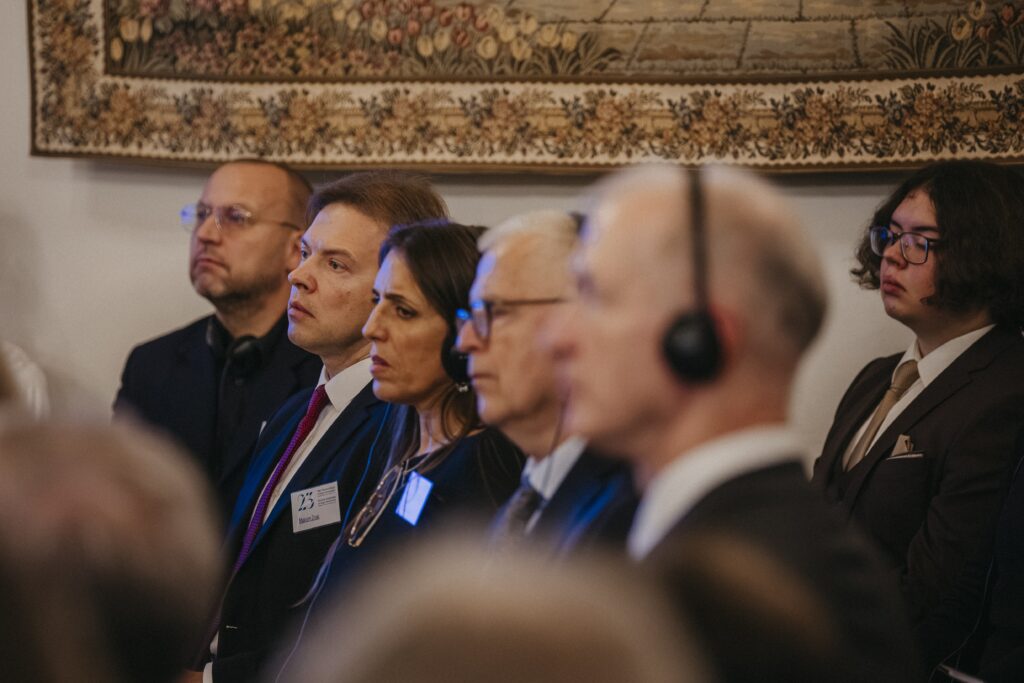
Individuals and institutions from Poland and abroad are eligible for the Prize.
The Prize Committee includes representatives of the President of the Republic of Poland, the Ambassador of the Federative Republic of Brazil, the Ambassador of the Kingdom of Sweden, the Office of the United Nations High Commissioner for Refugees in Poland, the Department of Global Affairs of the Ministry of Foreign Affairs of the Republic of Poland, the Commissioner for Human Rights, the Consul General of the United States in Kraków, the Mayor of Kraków, the Prize’s Founder – ZUE S.A. – and its Initiators – the ZNAK Foundation and the Willa Decjusza Association.
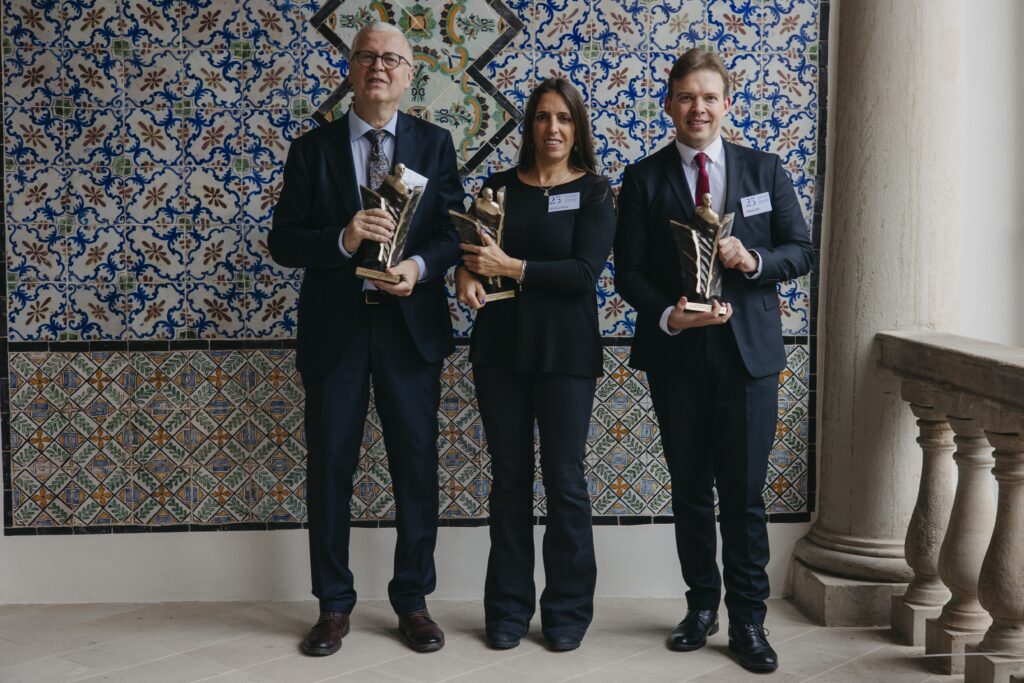
The laureates of the 23rd Polish Prize of Sérgio Vieira de Mello are:
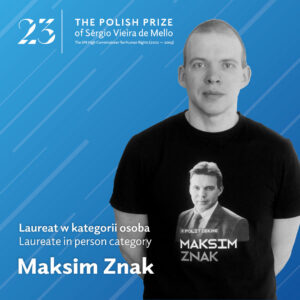
In the Individual category – Maksim Znak (born 1981), a Belarusian lawyer, writer and advocate for the rule of law. He holds a PhD in Law from Belarusian State University and has worked in both legal practice and academia. During the 2020 presidential election campaign, he represented Viktar Babaryka, Maria Kalesnikava and Sviatlana Tsikhanouskaya, and co-founded the Coordination Council for the Peaceful Transfer of Power. Arrested in September 2020, he was sentenced to ten years in prison. For more than a thousand days, he was held incommunicado. While in prison, he wrote Zekamerone, a collection of one hundred short stories published in six languages. Released in December 2025 as part of a prisoner exchange, he was forcibly deported and currently lives in Warsaw.
In her laudation, Magdalena Heydel, President of the Polish PEN Club, said:
Writing became not only a necessity but also a daily act of resistance. They could take away my manuscript, but they could not take away my thoughts.
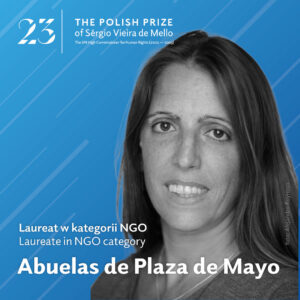
In the Non-Governmental Organisation category – Abuelas de Plaza de Mayo (Grandmothers of Plaza de Mayo), an Argentine human rights organisation founded in 1977. Its mission is to find children who were abducted or born in captivity during Argentina’s military dictatorship (1976–1983) and restore their identities. The organisation played a pioneering role in developing genetic testing methods to identify missing children and contributed to the establishment of Argentina’s National Genetic Data Bank. By July 2023, its efforts had led to the discovery of 133 grandchildren. Abuelas de Plaza de Mayo also supports legal proceedings against those responsible for enforced disappearances and illegal adoptions. In 2011, the organisation received the UNESCO Félix Houphouët-Boigny Peace Prize.
In his laudation, Adam Krzywosądzki, Director of the Department of Global Affairs at the Ministry of Foreign Affairs of the Republic of Poland, said of the Grandmothers:
Their work demonstrates that consistent civic engagement can change lives, transform state institutions and raise human rights protection standards around the world. Today, we pay the highest tribute to Abuelas de Plaza de Mayo for their extraordinary courage, unwavering determination and lasting contribution to the defence of truth, memory, justice and human rights.
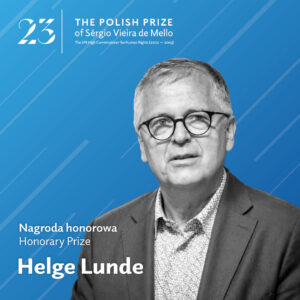
The Special Award was presented to Helge Lunde (born 1961), a Norwegian cultural activist and Executive Director of the International Cities of Refuge Network (ICORN). From 1998 to 2005, he headed Kapittel, the international festival of literature and freedom of expression in Stavanger, while also coordinating a support programme for persecuted writers. In 2006, he co-founded ICORN, becoming its first Executive Director, a position he continues to hold today. Under his leadership, the network has grown to encompass more than 90 cities worldwide. Through his work, he promotes the role of cities in protecting democracy, human rights and freedom of expression.
Helge Lunde’s greatest achievement, however, was turning this idea into an institution capable of withstanding political, personal and financial changes. The most lasting testament to his work is the people who have regained their safety, their ability to create and their right to shape their own future.
— said Robert Piaskowski, Director of the National Centre for Culture, in his laudation.
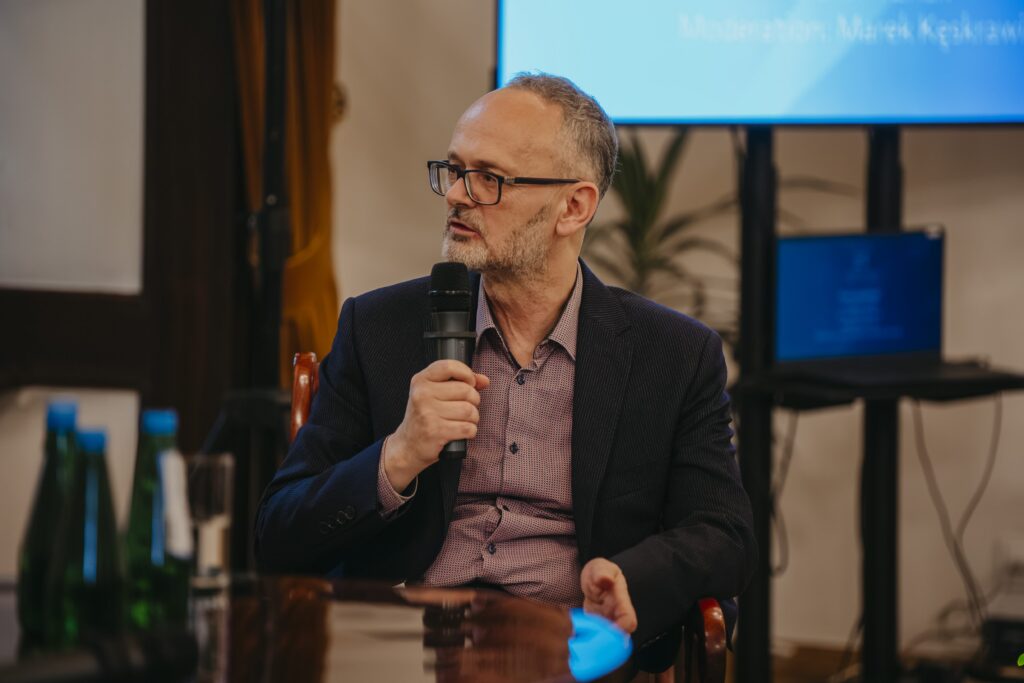
The conversation with the laureates, which complemented the afternoon’s programme at Willa Decjusza, was led by Marek Kęskrawiec, Editor and Head of the National News Section at Tygodnik Powszechny. This now-traditional panel discussion once again made all those present aware of how close the issues addressed by the laureates are to us all, and of the universal nature of the rights they fight to defend.